
Why is fungi identification important?
Fungi are one the largest and most diverse groups of organisms in the world. As we have the plant and animal kingdoms, fungi make up a kingdom of their own. From just talking a look at them, you would probably assume that fungi and plants are very similar, when in fact fungi are actually biologically closer to animals.
Fungi are responsible for important environmental processes such as nutrient cycling and plant, animal and soil health. Humans also rely on fungi in food production, including items such as cheese, bread and chocolate and the manufacture of drugs and biofuels. Not forgetting that there is a huge market for edible mushrooms all over the world.
MYCOLOGY
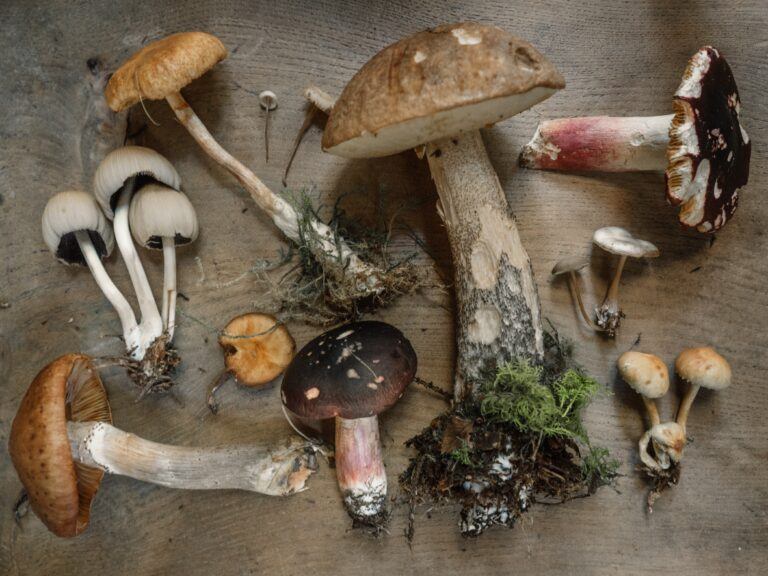
Mycology is the study of fungi. For something that is so important to ecosystems and biodiversity, fungi are under-studied when compared with animals and plants. There are estimated to be at least six times as many species of fungi than plants, anywhere between 2 and 11 million! Approximately only 150,000 of these have been officially described or recognised.
The criteria used by taxonomists to describe fungal species can make it very difficult to describe, identify and compare across the many different groups. More recently, fungi identification has advanced with the help of DNA barcoding.
FUNGI IDENTIFICATION USING DNA BARCODING
DNA barcoding can be utilised to help reliably identify fungi species when a visual identification is difficult.
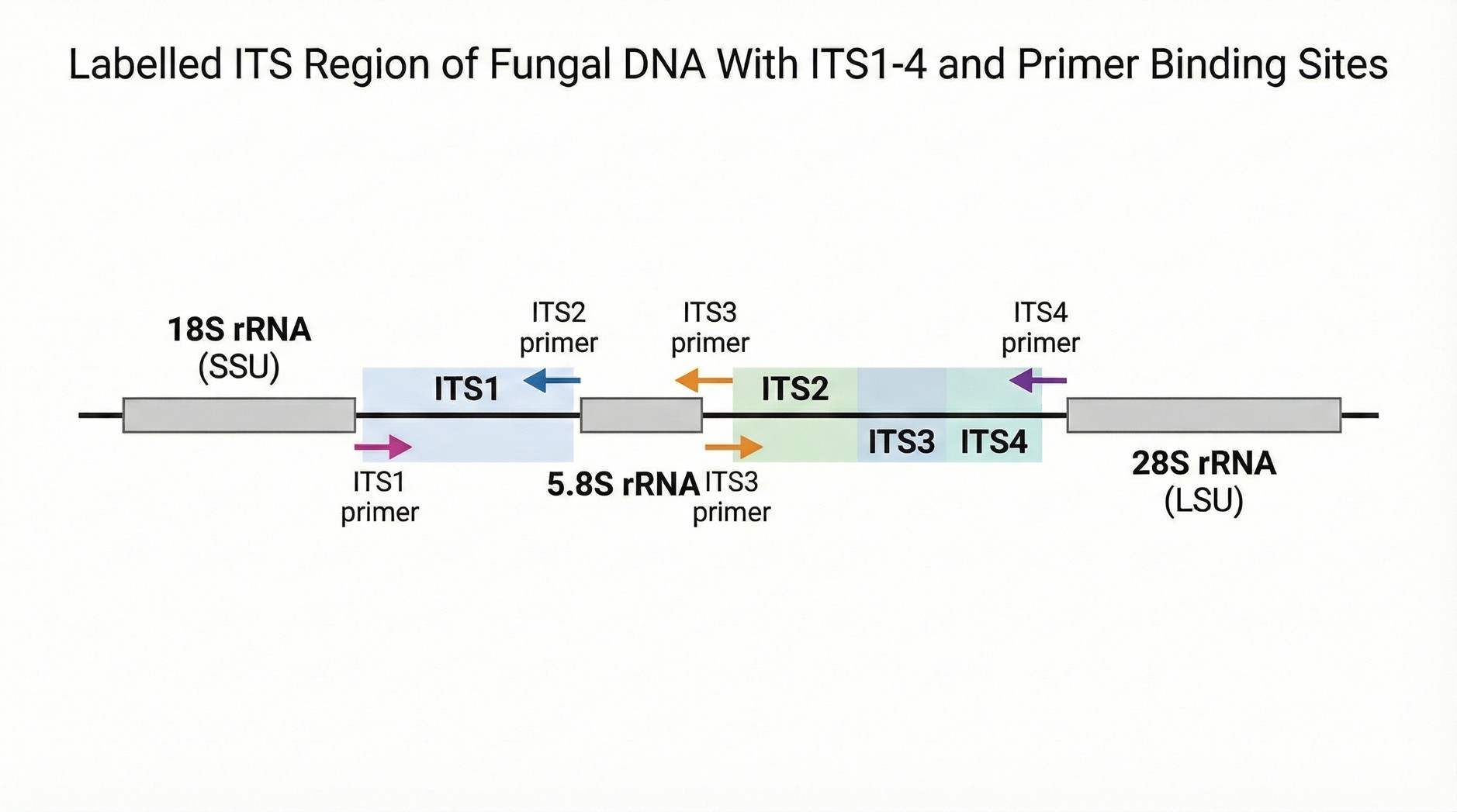
For fungi the unique parts of the genome used for species identification are the Internal Transcribed Spacer (ITS) regions (ITS1 and ITS2) and 5.8 ribosomal DNA (5.8 rRNA) gene. These are sequenced to produce a DNA barcode for fungi.
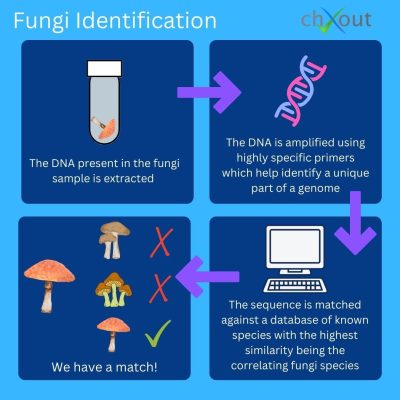
The sequence or barcode is compared against the National Centre for Biotechnology Information (NCBI) GenBank database of known species.
HERE'S THE SCIENCE
The Internal Transcribed Spacer (ITS) is a stretch of ribosomal DNA (rDNA), present across all members of the fungi kingdom. Over time, evolution has allowed the ITS region to become incredibly divergent between species. Because of this variation, analysing the ITS region allows scientists to accurately identify fungal species by comparing their DNA sequences. Labelled in the diagram are the ITS1 and ITS4 primers, commonly used to target this area.
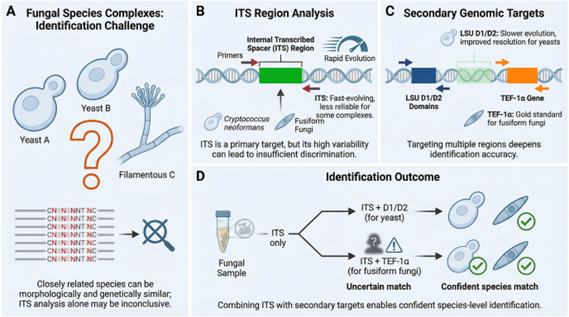
For some closely related species, or groups (known as species complexes), ITS analysis alone may not be sufficient evidence to give a confident species match.
In these special cases, additional testing can be run, using primers targeting additional regions of the genome. By analysing more than one site, we gain a deeper insight into the organism’s identity.
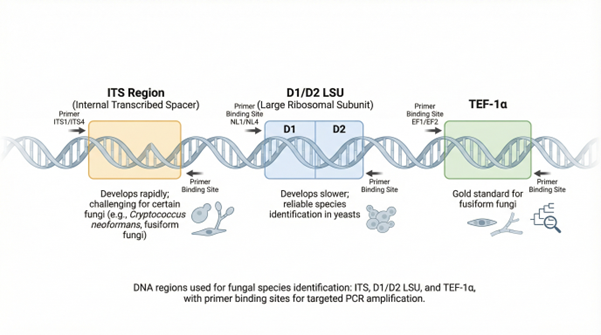
A common secondary target is the Large Ribosomal Subunit, specifically Regions 1 and 2 (D1/D2 LSU). In many yeasts, such as Cryptococcus neoformans, the ITS region evolves incredibly rapidly, making it more difficult to distinguish between species. The D1/D2 LSU develops at a slower rate, providing a more insightful view of the genetic code and species match.
Similarly, many fusiform fungal species are famously tricky to identify through ITS analysis alone. The gold standard here is to target the Translation Elongation Factor 1-alpha gene (TEF-1α), using complementary primers
FUNGI IDENTIFICATION SAMPLE INFORMATION
A small piece of fungi is required to carry out the analysis. We recommend a minimum sample size of around 20 x 20mm or approximately 100mg (multiple smaller pieces are also acceptable) so that we have a reasonable quantity in case the process needs to be repeated.
Place the sample in a paper envelope wrapped in paper padding for protection (for example, kitchen towel or equivalent). Any form of unused paper or cardboard packaging is suitable as long as your sample is secure. If you have multiple samples to identify, please ensure they are packaged individually inside the main postage envelope and labelled clearly.
Please do not use plastic containers or Ziploc bags to send us your sample as this can cause fungi to sweat and mould to grow.
For more information about sample submission, please see our fungi sampling instructions document at the top of this page.
Responsible fungi study and sample collection
When collecting fungi samples please ensure that you are following the Countryside Code, making sure that you always seek landowner permission, avoid causing any damage or disturbance to the location or other organisms and leave the area as close as possible to the state in which it was found.
Please do not collect more than is necessary. Fungi species are an important part of the ecosystem and can be extremely rare, including four species protected by schedule 8 of the Wildlife and Countryside Act 1981.We also recommend reading the British Mycological Society (BMS) Code of Conduct prior to collecting any samples.
PLEASE NOTE
Results are for research purposes only and should not be interpreted as confirmation that a fungus is safe to be eaten at any time.
WHAT DO I NEED TO DO?
- Collect your sample using our sampling instructions at the top of the page.
- Ensure that your samples are sealed securely and labelled correctly.
- Complete the relevant forms for your service. If you could please email them to [email protected] we will know to expect your sample(s) & it will help us to manage caseloads in busy periods. Please note you may need to download a free PDF reader rather than a PDF viewer to complete the form.
- Package your samples safely (a jiffy bag is recommended to avoid crushing as much as possible) and include your client reference. Please enclose your sample submission form if these have not already been emailed to us.
- Send your samples to us at: chXout®, The Durham Genome Centre, Park House, Station Road, Lanchester, DH7 0EX
- Your sample(s) will be checked and logged in upon receipt ready to be passed to the laboratory.
- A report will be emailed to you attached as a PDF document within your chosen turnaround time.
FUNGI IDENTIFICATION FAQ'S
Please do not use plastic containers or Ziploc bags to send us your sample as this can cause fungi to sweat and mould to grow.
The sample submission form at the top of the page can be downloaded and emailed to us or printed and included with your samples. You will also find a sample submission instructions document which can be downloaded for further information.
Please be mindful you are still collecting the minimal quantity required based on the amount of fungi found. Please see British Mycological Society code of conduct when collecting fungal sample.
Please email your photos to [email protected] alongside your sample submission form.