
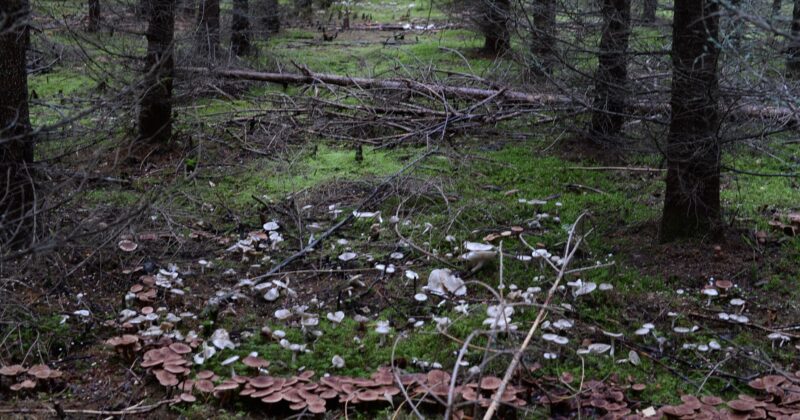
What Are Fairy Rings? The Magical Mushroom Circles Explained by Science

What Are Fairy Rings? The Magical Mushroom Circles Explained by Science

Imagine you're walking through a meadow on a misty autumn morning. The grass is damp beneath your feet. The air smells faintly of earth and fallen leaves. Then, ahead of you, you notice something peculiar: a perfect circle of mushrooms rising from the ground as though placed there by an invisible hand. For hundreds of years, people looked at these strange rings and reached a supernatural conclusion. Fairies. Witches. Elves. Even the Devil himself. Today we know fairy rings are the work of fungi rather than magical creatures. But the truth turns out to be every bit as fascinating as the legends. The Fairy Ring Mysteries That Terrified Medieval Britain Long before scientists understood fungi, fairy rings inspired both wonder and fear. Across Britain, Ireland and much of Europe, people believed these mushroom circles marked places where fairies gathered after dark. According to folklore, fairy folk danced in circles beneath the moonlight, leaving rings in the grass as evidence of their secret celebrations. The stories varied from village to village. Some warned...
Read More
Using eDNA analysis for great crested newt surveys

Using eDNA analysis for great crested newt surveys

The great crested newt (Triturus cristatus) is the largest and rarest newt to be found in the United Kingdom. In the last century the species has faced a large decline leading to them becoming a protected species in the UK and Europe. Great crested newts (GCN’s), their eggs, breeding sites and resting places are protected by law.  This makes it an offence to: capture, kill, disturb or injure great crested newts deliberately. damage or destroy a breeding or resting place. obstruct access to their resting or sheltering places (deliberately or by not taking enough care). possess, sell, control or transport live or dead newts, or parts of them. take great crested newt eggs. Due to their protected status, it is now often a requirement to survey for GCN when there are waterbodies within a certain radius of a development site as part of the planning application. Standard methods of ecological surveys include torch surveying, bottle traps and egg searches by licenced surveyors. Environmental...
Read More