
For centuries, mushrooms have been associated with witches, fairies, poisonings, magic potions and mysterious illnesses. Some of those stories contain a grain of truth.
Many do not.
Let’s separate fungal fact from fungal fiction and explore some of the most persistent mushroom myths still circulating today.
Why Are There So Many Mushroom Myths?
Before modern science, fungi were incredibly difficult to explain.
Mushrooms seemed to appear overnight. Strange circular formations suddenly emerged in fields. Some species looked colourful and inviting while others caused serious illness.
Without an understanding of spores, DNA or underground fungal networks, folklore filled the gaps.
Today, mycology allows us to understand fungi far more accurately, but many old beliefs continue to persist.
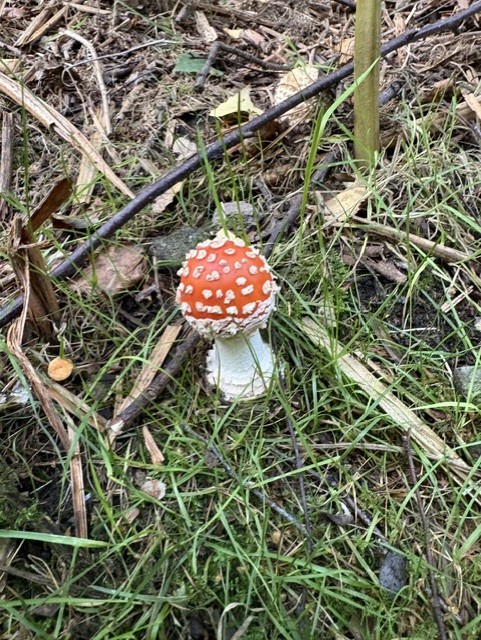
Many common mushroom myths originated long before scientists understood fungal biology.
Myth 1: All Toadstools Are Poisonous
This is perhaps Britain’s most persistent mushroom myth.
The word toadstool has no scientific meaning whatsoever.
Biologists don’t classify fungi into mushrooms and toadstools. Scientifically speaking, they’re simply mushrooms.
Historically, people often used:
- Mushroom = edible fungus
- Toadstool = poisonous fungus
Unfortunately, nature doesn’t work that neatly.
Many edible species have been called toadstools, while some dangerous fungi have been described as mushrooms.
The distinction comes from folklore rather than biology.
If you’d like to learn more about where this misconception began, read our article explaining the difference between mushrooms and toadstools.
Myth 2: Mushrooms Appear Overnight
It certainly looks that way.
You walk through a field one day and see nothing. Return after rainfall and suddenly dozens of mushrooms have appeared.
The reality is very different.
The fungus itself has often been present for months, years or even decades.
What you’re seeing is simply the fruiting body emerging from an already-established underground fungal network known as mycelium.
The mushroom may appear quickly, but the organism behind it has usually been quietly growing beneath the soil for a long time.
Want to learn more? Explore our guide to DNA Barcoding Fungi and discover how scientists identify fungal species.
Myth 3: Touching a Poisonous Mushroom Is Dangerous
Many people are nervous about touching unknown fungi.
Fortunately, this fear is largely unfounded.
Most mushroom toxins are dangerous only when consumed.
Professional mycologists routinely handle potentially poisonous fungi during identification work.
As with any natural material, washing your hands afterwards is sensible practice. However, casual contact is not generally considered sufficient to cause poisoning.
The danger comes from eating an incorrectly identified mushroom, not touching it.
This highlights the importance of accurate species identification before consuming any wild fungus.
Myth 4: Brightly Coloured Mushrooms Are Always Toxic
Nature loves exceptions.
While some poisonous species display bright colours, many harmless fungi are also colourful.
Likewise, some of the most dangerous mushrooms in the world appear surprisingly plain and ordinary.
Colour alone is one of the least reliable methods of fungal identification.
Experienced foragers never rely on simple visual rules such as:
- Bright colours mean danger
- White mushrooms are safe
- Animals eating them means they’re edible
- Silver spoons change colour around poisonous fungi
None of these methods are scientifically reliable.
Proper identification requires examining multiple characteristics and, in some cases, DNA analysis.
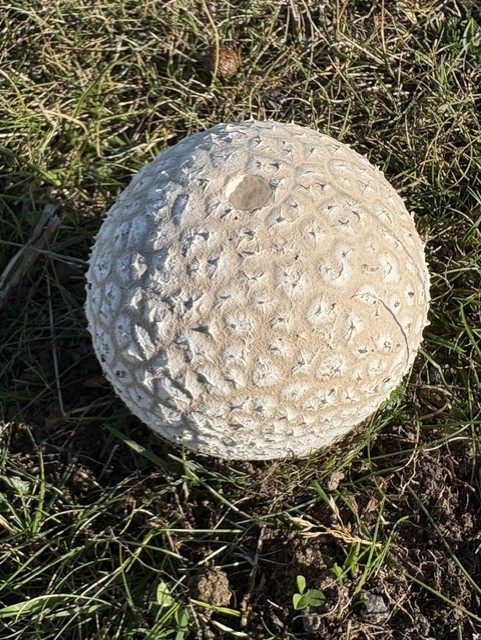
Appearance alone is not enough for accurate fungal identification.
Myth 5: Fungi Are Just Plants
This misconception survived for centuries.
Because mushrooms grow from the ground and remain rooted in place, many people assumed they belonged to the plant kingdom.
Modern genetic research tells a different story.
Fungi belong to their own biological kingdom entirely.
Unlike plants, fungi:
- Do not photosynthesise
- Contain no chlorophyll
- Digest food externally
- Absorb nutrients from their surroundings
In fact, fungi are more closely related to animals than they are to plants.
It’s one of the most surprising discoveries in modern biology.
The Truth About Fairy Rings
Another myth that continues to capture the imagination involves fairy rings.
For centuries people believed these circular formations marked places where fairies danced beneath moonlight.
Some legends even warned that stepping inside would result in bad luck, invisibility or transport to another realm.
The real explanation involves expanding colonies of underground mycelium producing mushrooms around their outer edge.
Although science solved the mystery, fairy rings remain one of the most fascinating examples of how fungi inspired folklore.
Modern Science Is Changing Fungal Identification
Historically, fungi were identified entirely through physical appearance.
Today, DNA sequencing provides another powerful tool.
Closely related species often appear remarkably similar, making visual identification difficult.
Using the same molecular techniques discussed in our DNA Barcoding Fungi article, scientists can compare DNA sequences to reference databases and identify fungi with greater confidence.
If you’ve discovered an unusual mushroom and would like to identify it, our Fungi DNA Identification Service can help determine exactly which species you’ve found.
Final Thoughts
The truth about fungi is often even more fascinating than the myths.
Beneath our feet exists a kingdom of giant underground networks, ancient ecological relationships, self-digesting mushrooms and remarkable biological strategies.
It’s no wonder mushrooms have inspired stories, superstitions and folklore for thousands of years.
The next time you hear a mushroom myth, it’s worth asking whether there’s any science behind it.
You may discover that reality is every bit as interesting as legend.
Need Help Identifying an Unknown Fungus?
Visual identification isn’t always enough. ChXout’s DNA-based fungi identification service can help accurately determine fungal species using modern molecular techniques.