Protect our Pollinators: Identifying the UK’s Bee Populations

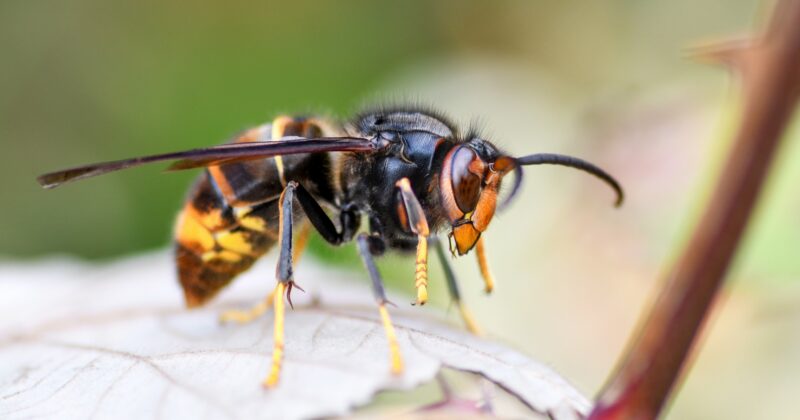
The Humble Bee The UK is home to more than 250 species of bee, ranging from honeybees to bumblebees and the lesser-known solitary bees. Together they play an essential role in the maintenance of biodiversity and functioning of our ecosystems. Unfortunately, a combination of habitat loss, pesticides and climate change are contributing to the startling decline in our bee populations.  Understanding the humble bee’s role in our world is paramount to their protection. With such a diversity of species comes a wide range of specialities. However, many species appear remarkably similar, making it near impossible to differentiate between them. This is where species identification becomes crucial, allowing us to understand which species are present, and how to best protect them. Become the Bee's Knees in Species ID... Bumblebees, like Bombus terrestris are the classic fluffy fliers you know and love. With their thick fur coat they can fly in cooler, low light conditions. For this reason, they can kick-start pollination in early spring, when many species are not yet active. Bumblebees carry out pollination across wildflowers, and a few crops, but their special...
Read More

Mini Architects: The Hidden Importance of Lichens and Mosses 

Hidden Heroes Lichens and mosses make up some of the lesser noticed details of the forest. Growing quietly on stone walls, tree bark and exposed rock, they occupy a large range of ecological niches, supporting the ecosystem in some very unexpected ways. Acting as keystone species, entire ecosystem health can rely upon them, with removal having catastrophic effects.   Despite sharing morphological similarities and harmoniously growing side by side, these two organisms are very different, making species much trickier than it seems.  Both life forms play a pivotal role in primary succession, the earliest stage of ecosystem formation. Lichens break down rocks through chemical and physical means, this creates the first layers of soil in otherwise barren landscapes. This thin substrate is then colonised by mosses, stabilising and enriching conditions, encouraging new species to establish.   Lichens Despite appearing as a single organism, lichens are a partnership between a fungus and a photosynthetic partner. The latter is usually a cyanobacteria or green algae. The thallus is the main body of the lichen, made mostly of the fungus, whilst the sugar-producing partner provides food.   Many lichens belong to the Ascomycota phylum and can be classified according to their fungal partner. This...
Read More

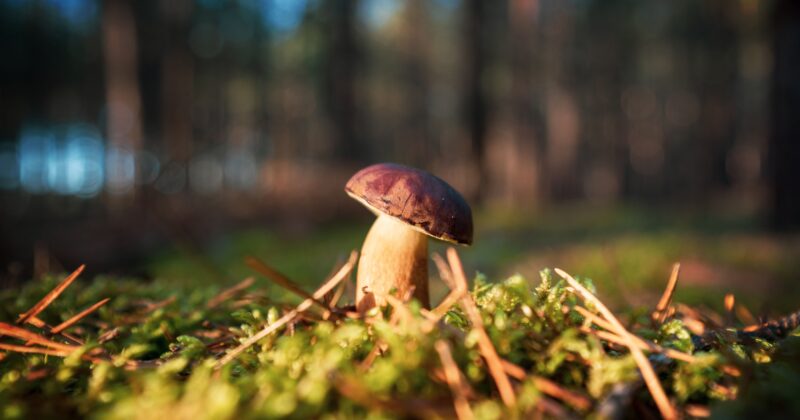
Fruiting Through the Seasons: An Annual guide to Nature’s Wild Fungi

Summer Fungi Temperature increases and warm rains encourage a new cohort of fungi to emerge. Unlike Spring fungi, summer fungi have wider fruiting windows and many appear intermittently throughout the season.  Summer brings long, sunny days, meaning trees are in peak photosynthetic activity. For mycorrhizal fungi this is good news, hence why a vast proportion of this season’s species are. With sugar production and transportation reaching new highs, an elevated level of underground activity can be supported, with fungi bursting out across the woodland floor.   Summer fungi, such as the well-known Chanterelles (Cantharellus cibarius), aid trees in these elevated temperatures. Their fungal hyphae, comparable to long networks of string, extend far beyond where the tree roots can. Crucially, this allows absorption of more water, meeting inflated demands. Many groups, such as the Brittlegills, also help increase nutrient uptake. These Russula species, classic summer fruiters, aid phosphorus and nitrogen absorption. Phosphorus promotes strong root development, helping with stability, whilst nitrogen is essential for producing chlorophyll. Chlorophyll is a green pigment, present in leaves, which allows sunlight to be converted into energy through photosynthesis. These mutually beneficial relationships demonstrate the true intelligence and interconnectedness of nature! Autumn Fungi Autumn is prime fungi time in the UK, with mushroom growth in full swing. Many...
Read More

The Plight of Britain’s Butterflies & Moths — And How We Can Save Them

Across the UK, butterflies and moths are in trouble. Once‑familiar garden visitors like the Small Tortoiseshell and Chalk Hill Blue are now struggling, and conservation groups warn that these delicate species are flashing red lights about the wider health of our environment. New data from 2024–2025 paint a stark but actionable picture of decline — and provide clear guidance on what we can all do to help. A Crisis in Colour: What the Data Show Recent monitoring results from Butterfly Conservation reveal that more than half of the UK’s 59 butterfly species are now in long‑term decline, with 2024 ranking among the worst years ever recorded for British butterflies — 51 out of 59 species declined compared to 2023, with nine species hitting new record lows. [butterfly-...vation.org] Government biodiversity indicators show long‑term declines of 25–39% in butterfly habitat specialists across England and the broader UK. [independent.co.uk], [gov.uk] Even familiar garden favourites like the Small Tortoiseshell have suffered an 86% decline since the 1970s. [independent.co.uk] Why Are Butterflies and Moths Declining? 1. Habitat Loss Urbanisation, intensive farming,...
Read More
COP 27, COP 19, COP 15…what is a “COP” and why are they important?

COP 27, COP 19, COP 15…what is a “COP” and why are they important?

COP 27, COP 19, COP 15...what is a "COP" and why are they important? We have just seen COP27 all over the news, COP 19 ended last week and COP15 is due to take place in December but what is a “COP”? COP standards for Conference of the Parties, which is the governing body of an international convention, for example, climate change. COP is a global conference where world leaders, heads of state, scientists and non-government organisations meet to discuss, review and put the rules of the convention into place. COP 27 COP27 took place from 6 to 20 November in Sharm el-Sheik, Egypt. It was the 27th United Nations Climate Change Conference to discuss the action needed to tackle climate change. Prior to the start of the conference, there was controversy when Prime Minister Rishi Sunak announced that he was unable to attend and only 24 out of 193 countries has submitted their plans to the UN prior to the start of the...
Read More

Dogs are our oldest friends

Dogs are not only humans' best friend, but also the oldest, a study has revealed.  A DNA analysis has shown that dog domestication can be traced back to the end of the last Ice Age, more than 11,000 years ago. This shows dogs were domesticated before any other known species.  According to the research - which sequenced 27 ancient dog genomes - all dogs derive from a single extinct wolf population.  Cats, on the other hand, became our pets some 6,000 years ago when humans settled in a farm. You can read the full study here....
Read More