
When most people think of fungi, they imagine mushrooms poking through woodland soil after a rainy day.
But mushrooms are merely the tip of the iceberg.
The real fungus is usually hidden underground, quietly spreading beneath forests, gardens and fields. This secret world is known as mycelium, and it may be one of the most important biological networks on Earth.
Once you understand mycelium, you’ll never look at a mushroom the same way again.
The Mushroom Is Just the Fruit
Imagine walking into an apple orchard and deciding that the apples are the entire tree.
It sounds ridiculous, yet that’s effectively what most people do with mushrooms.
A mushroom is simply a reproductive structure designed to release spores and help the fungus spread. The main organism exists elsewhere, often completely hidden from view.
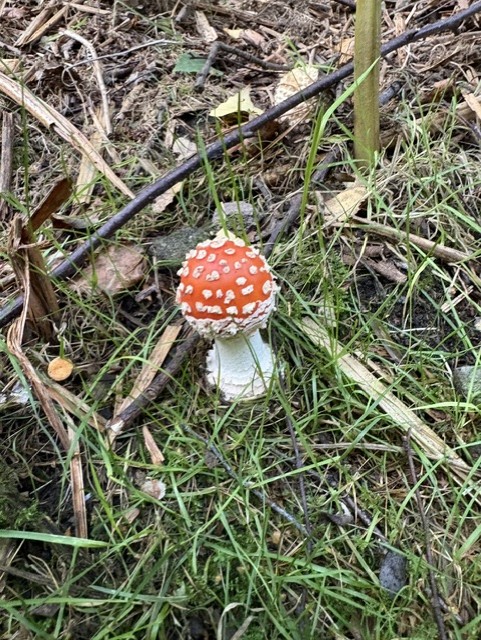
The mushroom is only the visible fruiting body. Most of the fungus exists underground as an extensive mycelial network.
That hidden body is mycelium.
Made from millions of microscopic filaments called hyphae, mycelium forms intricate web-like networks that grow through soil, wood, leaf litter and even living roots.
A single gram of healthy soil may contain metres of fungal threads.
If you’ve ever wondered why mushrooms can seem to appear overnight, it’s because the fungus is already there. The underground mycelium may have been growing for months, years or even decades before producing visible mushrooms.
Nature’s Ultimate Explorer
Unlike animals, fungi cannot move.
Instead, they grow.
The tips of hyphae continuously extend through their environment, exploring for food and water. As they spread, they release enzymes that break down organic material before absorbing nutrients.
Think of mycelium as a living mining operation.
It searches relentlessly for valuable resources, extracting nutrients from fallen trees, dead leaves, animal remains and countless other sources of organic matter.
This ability makes fungi among nature’s most effective recyclers.
The Organism Hidden Beneath Your Feet
The extraordinary thing about mycelium is its scale.
A woodland that appears quiet on the surface may be alive with vast fungal networks below. Multiple fungal species can coexist beneath a single square metre of soil, weaving together complex underground ecosystems.
Some individual colonies become enormous.
A famous honey fungus in Oregon covers nearly four square miles and may be thousands of years old, making it one of the largest known living organisms on Earth.
What appears to be hundreds of separate mushrooms is actually one giant connected being.
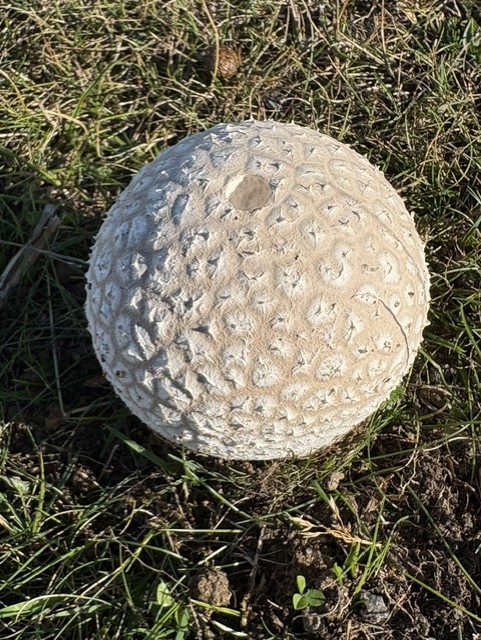
Puffball fungi can release millions of spores, allowing fungal networks to establish new colonies across the landscape.
The Wood Wide Web
One of the most fascinating discoveries in modern ecology involves the relationship between fungi and plants.
Many fungi form partnerships known as mycorrhizal associations, connecting directly with plant roots.
The relationship works brilliantly.
Trees provide fungi with sugars produced through photosynthesis. In return, fungi supply water and nutrients such as phosphorus and nitrogen collected from the soil.
This partnership is ancient, dating back hundreds of millions of years.
Researchers have observed nutrients and chemical signals moving through these underground fungal connections, leading to the nickname “The Wood Wide Web.”
While the comparison isn’t perfect, it highlights the remarkable interconnectedness of natural ecosystems.
If you’re interested in how scientists identify fungal species genetically, take a look at our article on DNA Barcoding Fungi.
How Mycelium Creates Fairy Rings
Mycelium is also responsible for one of nature’s most famous fungal phenomena: fairy rings.
As a fungal colony expands outward from a central point, mushrooms often emerge around the edge of the active growth zone, creating the circular formations that inspired centuries of folklore.
You can explore the science and myths surrounding these fascinating formations in our article about fairy rings.
Forests Could Not Function Without Fungi
Imagine what a forest would look like without decomposition.
Every fallen leaf would remain.
Every dead branch would accumulate.
Every fallen tree would slowly pile upon countless others.
Within a surprisingly short time, forests would be buried beneath their own waste.
Fungi prevent this from happening.
By breaking down complex materials such as lignin and cellulose, fungi recycle nutrients and return them to the ecosystem. New plant growth depends heavily upon this continual recycling process.
They are nature’s clean-up crew, operating twenty-four hours a day without anyone noticing.
Fungi May Help Build the Future
Scientists are increasingly looking to mycelium as a sustainable material.
Researchers have created:
- Biodegradable packaging
- Insulation materials
- Leather alternatives
- Building materials
- Water filtration systems
Mycelium can grow quickly, requires relatively few resources and naturally decomposes at the end of its useful life.
What was once dismissed as woodland fungus could become an important tool in creating more sustainable technologies.
Modern Fungal Identification
As our understanding of fungi grows, researchers increasingly rely on DNA-based methods to accurately identify species.
Many fungi can appear remarkably similar, making visual identification difficult even for experienced enthusiasts.
That’s why ChXout offers a professional Fungi DNA Identification Service using modern molecular biology techniques.
You can also explore our wider work in fungal and wildlife genetics through the ChXout Research Page.
Final Thoughts
Beneath almost every forest path lies a hidden world.
Mycelium connects plants, recycles nutrients, supports ecosystems and quietly keeps nature functioning.
The next time you spot a mushroom emerging from the soil, remember that you’re only seeing a tiny glimpse of a much larger story.
Beneath your feet may lie one of Earth’s most remarkable living networks.
Need Help Identifying a Fungus?
Have you discovered an unusual mushroom, bracket fungus or woodland specimen?
Using DNA sequencing, ChXout can help identify fungal samples that may be difficult to determine using appearance alone.
Learn More About Fungi
Interested in fungal science, DNA identification and mycology? Explore some of our most popular resources below.